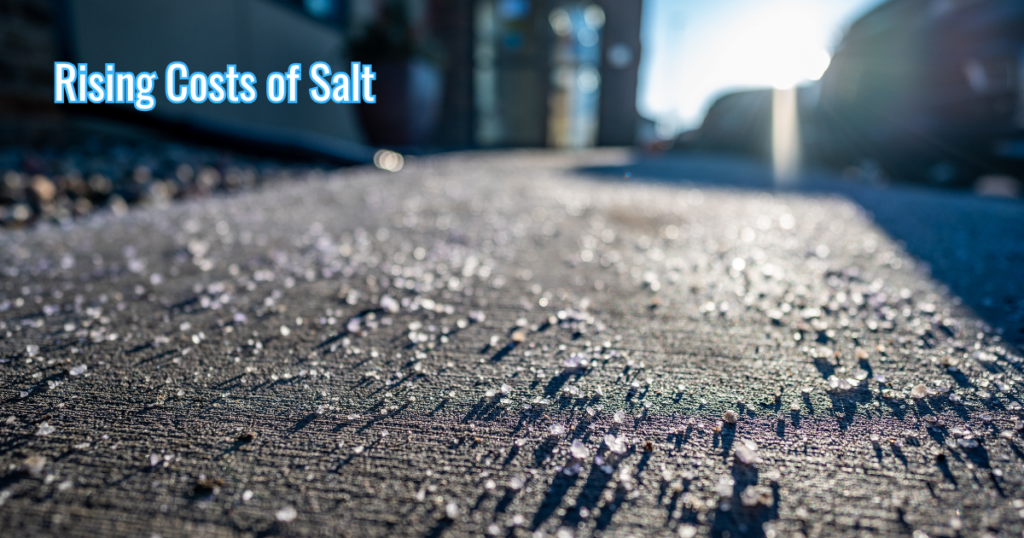
Last winter caught much of the Midwest off guard. A combination of frequent storms, depleted supplier reserves, port logistics failures, and the exit of a major bagged salt producer left contractors and municipalities across the region scrambling for material. In some metro areas, spot market salt pricing reached three times contracted rates, and entire communities had to ration application to keep primary roads passable.
As we plan for the 2026-27 season, the indicators suggest these challenges are not behind us. Regional salt reserves were drawn down significantly last winter with little opportunity to rebuild. Domestic mining capacity has not meaningfully expanded in over two decades, and North America now depends on imports for a substantial share of its annual demand. The Cargill bagging division closure and shifts in how major suppliers allocate inventory mean the regional supply landscape going into next winter looks tighter, not looser.
We want our clients to know what Landmark is doing now to ensure your properties stay safe and accessible regardless of what the season brings.
Securing Supply Early
We are not waiting to see what the market does. We are actively working with our suppliers to pre-commit a significant portion of our seasonal volume well ahead of the fall rush. By locking in allocation early at appropriate volumes, we reduce the risk of being caught short during peak demand. We are also building redundancy into our sourcing so a problem at any single supplier does not compromise our ability to service your property.
Stretching Every Ton Through Brine
One of the most important tools in our operation is liquid brine. By producing and applying brine in-house, we get more protective coverage out of every ton of salt we purchase, which matters more than ever in a tight market.
Brine is versatile. As an anti-icing agent applied before a storm, it prevents the bond between snow and pavement from forming in the first place, allowing crews to clear surfaces faster and with less granular salt afterward. It is also highly effective as a de-icing agent during and after an event. Because brine is already in liquid form, it begins working on contact rather than waiting to dissolve like granular salt, which means faster melting and better results at lower temperatures and lower application rates.
The Benefits Compound:
For your property and people: Surfaces stay safer earlier in a storm and clear faster afterward, with treatment that works on contact rather than waiting on dissolution.
For the environment: Less chloride runoff into soil, landscaping, and local waterways. Brine application is more precise, meaning material goes where it is needed rather than bouncing or scattering off treated areas.
For your budget: Lower material consumption helps insulate pricing from market volatility. When salt costs rise, the properties using brine-forward programs feel it less.
At Landmark Landscapes, we remain committed to providing exceptional value while carefully managing these rising costs. Our goal is to be transparent about the factors influencing pricing and to help our clients make informed decisions about their properties. By planning proactively and maintaining open communication, we can continue to create beautiful landscapes and provide dependable snow and ice management services for years to come.
Contact Us
Landmark Landscapes of Sheboygan Falls, WI is a full-service landscape company. Based out of Sheboygan County, with a Green Lake, Wisconsin satellite office. We are centrally located and uniquely positioned to service the areas of Sheboygan, Elkhart Lake, Fond Du Lac County, Green Lake County, Ozaukee County, Manitowoc County, and Door County. We can manage your property with our Total Property Care system, and design and build projects large and small. Contact us today at 920-467-6442 to learn how we can care for you.
